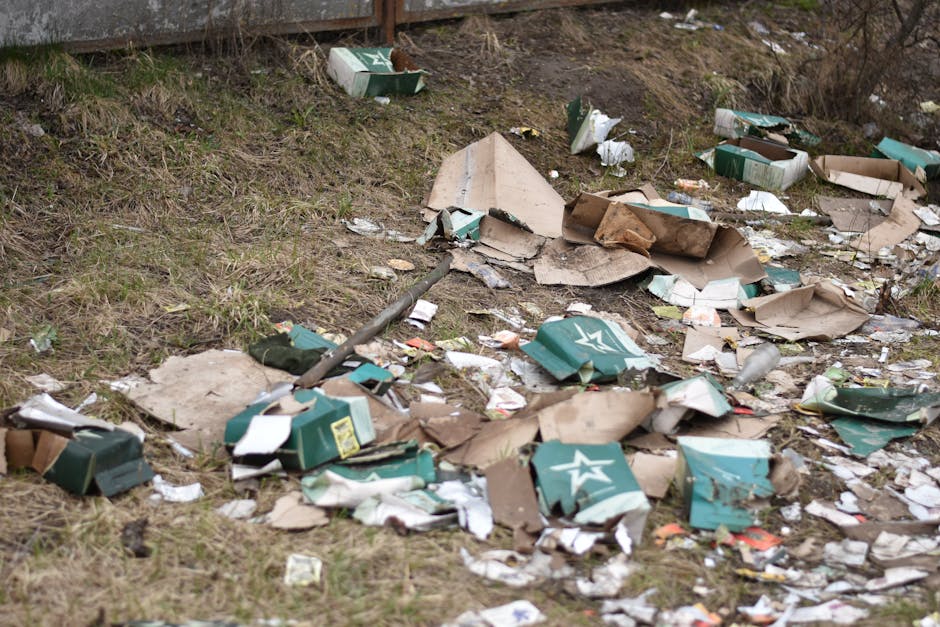
Crystal Palace rubbish removal guide for Westow Hill SE19

If you live, work, or are clearing a property around Westow Hill SE19, rubbish removal can go from a small job to a proper headache very quickly. One broken wardrobe becomes two bags, then a pile of mixed waste, and before you know it the hallway smells faintly of damp cardboard and old paint. This Crystal Palace rubbish removal guide for Westow Hill SE19 is here to make the whole thing simpler: what to remove, how the process usually works, what to watch out for, and how to choose a sensible route that saves time without creating new problems.
Whether you're clearing a flat, dealing with post-renovation debris, or just trying to get your home back under control after a busy few months, the right approach makes all the difference. Let's make it practical.
Why this guide matters
Westow Hill sits in a part of Crystal Palace where properties vary a lot: period homes, converted flats, upper-floor apartments, small businesses, and tucked-away side returns that never seem quite big enough for a full-scale clear-out. That means rubbish removal is rarely just "load it and leave". Access matters. Stairs matter. Parking matters. Neighbours matter too, especially when a bag of waste is left out a bit too long and the whole street notices.
The point of a good rubbish removal plan is not only to get rid of waste. It is to do it cleanly, legally, and with as little stress as possible. A thoughtful approach can reduce disruption, protect your flooring and walls, and help you avoid the classic mistake of mixing recyclable materials with items that need special handling. To be fair, once you've had one waste collection go sideways, you tend to become very careful the next time.
There is also a local practicality to it. SE19 roads can be busy, parking can be tight, and many residents do not have the luxury of storing waste for days while they figure things out. A clear removal plan helps you stay organised from the first box to the last awkward item that never quite fits anywhere.
Expert summary: The best rubbish removal approach is usually the one that matches the size of the job, the type of waste, the access at your property, and the speed you need. Not the cheapest-looking option on paper, and not the most complicated one either.
How rubbish removal works in Westow Hill SE19
At a simple level, rubbish removal is a collection and disposal service for unwanted items and waste that are too bulky, messy, or time-consuming to handle yourself. In practice, it usually starts with a rough assessment of what needs removing and ends with the waste being sorted, loaded, and taken away for appropriate processing.
Most people use rubbish removal when they have a mixed load. That could include old furniture, bags of general waste, renovation offcuts, broken appliances, garden waste, or a combination of all four. If the job is larger or more specialised, services may overlap with general waste removal, furniture disposal, builders waste clearance, or garden clearance.
What happens on the day? Usually something like this:
- You describe the waste and, if needed, share photos.
- A quote is given based on volume, weight, type of waste, and access.
- The team arrives, checks what is included, and confirms the work.
- Items are carried out, loaded safely, and separated where required.
- The waste is transported away for sorting, recycling, reuse, or disposal.
Sounds straightforward. Most of the time, it is. The real challenge is matching the service to the waste type. A sofa, for instance, is not the same as a bag of rubble, and a fridge should not be treated like old flat-pack furniture. If you need one small project-specific job, a specialised page such as mattress and sofa disposal or fridge and appliance removal may be the better fit.
Key benefits and practical advantages
The obvious benefit is convenience, but there is a bit more to it than that. Good rubbish removal saves time, reduces physical effort, and helps you deal with clutter before it starts affecting how you use your space. You can actually open the cupboard without a battle. Small win, but a satisfying one.
- Faster clearance: A trained team can remove large volumes far quicker than most DIY efforts.
- Less lifting: Helpful if you are dealing with heavy items, stairs, or awkward access.
- Cleaner finish: Waste is removed in one go rather than building up in stages.
- Better sorting: Reusable and recyclable materials can be separated more effectively.
- Reduced disruption: Useful for flats, shared buildings, and busy households.
There is also a planning benefit. Once you know what will be removed, you can sequence the rest of the job properly. For example, if you are clearing a loft, it often makes sense to book the removal after sorting what is being kept, donated, or stored. If you are downsizing, a broader service like home clearance or house clearance may be more efficient than piecemeal pickups.
And if you are clearing commercial space, it can help to look at office clearance or business waste removal instead of treating it like a domestic job. The disposal route and documentation expectations can differ. A bit tedious, yes, but important.
Who this is for and when it makes sense
This guide is for anyone in or around Westow Hill SE19 who needs waste gone without making a bigger mess of the situation. That includes homeowners, tenants, landlords, letting agents, tradespeople, shop owners, and office managers. It also makes sense for people who simply do not want to spend a Saturday wrestling a mattress down a narrow stairwell. Fair enough, really.
Here are some common scenarios where rubbish removal is the right call:
- You have just finished decorating and have leftover packaging, offcuts, and old fittings.
- You are moving out and need to clear bulky items before handover.
- You have inherited a property and need help with a full or partial clear-out.
- You are replacing furniture and want the old pieces taken away responsibly.
- You run a small business and need regular or one-off waste removal.
- You have a garage, loft, or basement full of mixed items that have quietly multiplied over the years.
If the job is mostly storage overflow rather than waste, a targeted service such as loft clearance or garage clearance may be more appropriate. That distinction matters because it can affect cost, timing, and what needs to be separated in advance.
Step-by-step guidance
Breaking the job into steps keeps it calm. Without a plan, rubbish removal turns into a pile of "I'll deal with that later" items, and later has a habit of becoming next month.
1. Identify the waste type
Start by sorting waste into broad categories: general rubbish, bulky furniture, appliances, builders' waste, garden waste, and anything potentially hazardous. You do not need to create a perfect sorting system, but you do need enough clarity to describe the load accurately.
2. Measure the volume roughly
You do not need a tape measure and a spreadsheet. Just think in practical terms: a few bags, a quarter van, half a van, or a full load. Photos help a lot here. Good photos save time and reduce the chance of surprise charges later.
3. Check access
Westow Hill properties often have stairwells, tight entrances, communal halls, or difficult parking. Note whether items are on the ground floor, up several flights, or in a rear garden. If something is unusually heavy, say so. Nobody likes discovering at the door that a wardrobe needs a two-person shuffle through a corridor barely wider than the wardrobe itself.
4. Separate anything special
Appliances, electronics, liquids, paints, batteries, and sharp or broken items may need extra care. A fridge, for instance, is usually treated differently from general furniture. For risky or restricted waste, a service such as hazardous waste disposal is the safer route than guessing.
5. Book the right service
Match the job to the service. If it is mostly one-off mixed rubbish, general waste removal may be enough. If it is a furniture-heavy clear-out, use a furniture-focused option. If you are planning a larger project, it is worth checking pricing and quotes so you know how the cost structure works before anyone arrives.
6. Prepare the area
Move smaller items away from the main route, unlock gates if needed, and make sure the team can access the waste safely. If you live in a shared building, give neighbours a heads-up where appropriate. Not everyone needs the full story, but a quick warning avoids irritation.
7. Confirm what is being taken
Before anything is loaded, check the list. This is the stage where a broken chair can suddenly become "actually, I was keeping that shelf" unless you are careful.
Expert tips for better results
A few small decisions can make the whole process smoother.
- Take photos in daylight: It sounds obvious, but dim hallway shots make quotes less accurate.
- Put heavy items near the exit if you can do so safely: Saves time and reduces lifting.
- Keep hazardous materials separate: Even if you think something is harmless, double-check. Old tins of paint and mystery containers are classic troublemakers.
- Use one clear staging area: Waste spread across several rooms slows everything down.
- Ask how recycling is handled: Responsible operators should be able to explain the basics clearly.
One more thing: if you are clearing a furnished property, think in layers. Keep, donate, remove. Not keep, maybe keep, maybe not, definitely maybe. That way lies chaos.
For household items that are still in usable shape, it can make sense to separate them from pure waste before you book a collection. A service like furniture clearance can be especially useful when you have mixed good-quality pieces and worn-out items that need responsible handling.
If the job includes soft furnishings, consider whether you need mattress and sofa disposal rather than a more general load. The more precise your booking, the fewer surprises later on.
Common mistakes to avoid
Most rubbish removal mistakes are easy to prevent once you know what to look for. The trouble is, people usually learn them the hard way.
- Underestimating the volume: Waste always looks smaller until it is stacked together.
- Mixing waste types carelessly: Builders' rubble, appliances, and general rubbish should not all be treated the same way.
- Forgetting access issues: Narrow stairs, parking restrictions, and long carry distances can change the whole job.
- Leaving hazardous items hidden in the pile: That can create safety problems and delay collection.
- Choosing purely on headline price: The cheapest quote is not always the best value if it excludes half the actual work.
- Assuming skip and rubbish removal are identical: They are not. Different jobs suit different methods.
For example, if you are working through a renovation, skip-style disposal may be fine for some loads, but not for awkward items carried down from a top floor flat. It is worth checking what can go in a skip as a comparison point, even if you end up booking a removal service instead.
Tools, resources and recommendations
You do not need a huge toolkit, but a few basics help.
| Item | Why it helps | Best for |
|---|---|---|
| Strong bin bags | Keeps loose waste together and easier to carry | General rubbish, soft items, small clear-outs |
| Work gloves | Helps protect hands from splinters, dust, and sharp edges | Most DIY clear-outs |
| Mask and dust cloth | Useful when clearing lofts or dusty storage spaces | Loft, garage, long-untouched rooms |
| Phone camera | Best way to show waste volume and access issues quickly | Quotes and planning |
| Labels or tape | Helps mark keep/remove items during a staged clear-out | Home and house clearances |
For anyone planning a more structured clearance, the most useful "resource" is honestly a good checklist and a clear understanding of what goes where. On the service side, the pages for house clearance, flat clearance, and office clearance help you match the type of job to the right kind of removal. That is usually where the efficiency comes from.
If you are interested in waste minimisation and better handling choices, the company's recycling and sustainability information is a sensible place to understand the broader approach. It is not glamorous, obviously, but it matters.
Law, compliance and best practice
Waste removal in the UK should be handled carefully, especially when waste is mixed, bulky, electrical, or potentially hazardous. You do not need to become an expert in waste legislation just to clear a flat in SE19, but it helps to know the basics. Responsible waste carriers should handle collection, transport, and disposal in line with applicable legal duties and accepted industry practice.
From a homeowner or tenant perspective, the main things to remember are simple:
- Do not leave waste where it could obstruct pavements, entrances, or shared areas.
- Separate hazardous or specialist items rather than hiding them in a general pile.
- Be honest about the type and amount of waste.
- Use a provider that can explain how they work and how waste is processed.
If the waste includes confidential paperwork, a separate confidential shredding service may be more appropriate than adding it to a general clearance. That is especially relevant for small businesses, landlords, or home offices where old documents tend to stack up in a box nobody wants to open.
For businesses, it is sensible to look at the company's health and safety policy, insurance and safety, and payment and security information before booking. That kind of transparency is a good sign. It means the operator is thinking beyond the collection itself, which is where trust starts to build.
And yes, if your project involves any item you suspect may be problematic, ask before the collection date. It is far easier to clarify in advance than to stand on the doorstep wondering whether that old drum of liquid actually counts as hazardous. Usually, it does.
Options and comparison table
Different waste jobs call for different methods. The best option depends on what you are clearing, how quickly it needs to happen, and how much lifting or sorting you want to do yourself.
| Option | Best for | Strengths | Trade-offs |
|---|---|---|---|
| General rubbish removal | Mixed household waste, bulky odds and ends | Fast, flexible, minimal effort | May not suit specialist waste |
| Furniture-focused clearance | Sofas, tables, wardrobes, mixed items | Ideal for home moves and upgrades | Large volumes may need a broader service |
| Builders' waste clearance | Renovation debris, rubble, site offcuts | Good for post-project clean-ups | Heavy waste can affect pricing and handling |
| Loft or garage clearance | Storage spaces full of forgotten items | Clear structure, good for deep decluttering | Access can be awkward |
| Skip-style disposal | Static jobs with predictable waste streams | Useful for longer DIY works | Not always ideal for narrow streets or upper floors |
In Westow Hill SE19, access often tips the balance. If getting a skip close to the property is difficult, a collection-based service can be much more practical. If you are not sure, compare the job in plain terms: where is the waste, what is it, and how quickly do you want it gone?
Case study or real-world example
Here is a realistic example. A resident in a converted flat near Westow Hill was preparing to move and had a mix of old shelves, a mattress, broken storage boxes, a few bags of general waste, and an old appliance tucked into the corner of the hallway. Nothing dramatic. Just one of those situations where the clutter quietly grows legs.
They started by separating obvious keep items from remove items, then took photos of the stairwell, the front entrance, and the main pile. That simple step made the booking much smoother because the access issue was clear from the start. The appliance was flagged separately, the bulky furniture was grouped together, and the general rubbish was bagged to reduce loose mess.
On collection day, the team could work methodically rather than improvising. The removal was quicker, the hallway stayed cleaner, and the resident did not have to second-guess what could or could not be taken. That's the key lesson, really: a little preparation avoids a lot of back-and-forth.
If that sounds familiar, you are not alone. A lot of Westow Hill clear-outs happen at the same time as a move, a renovation, or a life change. The waste itself is rarely the real problem. It is the timing, the stairs, and the decision fatigue.
Practical checklist
Use this before you book your rubbish removal:
- List the main waste types you need removed.
- Separate any hazardous, electrical, or confidential items.
- Estimate the volume as accurately as you can.
- Note stairs, parking, gates, and long carry distances.
- Take clear photos in good light.
- Decide what needs to be kept, sold, donated, or removed.
- Check whether the job fits a general, furniture, builders', or specialist clearance.
- Confirm the expected price basis before the collection.
- Prepare access on the day and keep routes clear.
- Ask how recyclable materials are handled.
If you are clearing a larger property, it can also help to read the company's about us page before booking so you understand the approach behind the service, and to review terms and conditions if you want the finer details. A few minutes now can spare you a headache later. Quite a lot, actually.
Conclusion
Rubbish removal around Westow Hill SE19 is usually straightforward once the waste is identified, access is understood, and the right type of service is chosen. That is the heart of this guide. Not rushing. Not guessing. Just matching the job to the method and keeping the process clean and sensible.
Whether you are clearing a flat, emptying a garage, managing renovation waste, or sorting out a business space, the smartest move is to plan the load before it becomes a pile. It saves money, reduces stress, and keeps the whole thing from getting out of hand. And if there is one thing clearing jobs do well, it is revealing how quickly "just a few items" can turn into a full-scale operation.
Get a free quote today and see how much you can save.
When the dust settles and the last bag is gone, the relief is real. That clear space feels good. Properly good.
Frequently Asked Questions
What is included in a Crystal Palace rubbish removal service for Westow Hill SE19?
It usually includes collection, loading, transport, sorting, and responsible disposal of agreed waste items. The exact scope depends on the type of waste and the service booked.
How do I know whether I need rubbish removal or a clearance service?
If you have mixed waste or bulky items, rubbish removal is often enough. If you are clearing a room, flat, loft, garage, or whole property, a clearance service may be more suitable.
Can bulky furniture be taken away from a flat or upper floor?
Usually yes, provided access is safe and the items can be removed without causing damage. It helps to mention stairs, narrow corridors, and parking limits when you enquire.
What should I do with appliances like fridges or washing machines?
Appliances are best handled separately because they often need specialist treatment. A dedicated appliance removal service is usually the safest option.
Can hazardous items go in a general rubbish collection?
Not usually. Paint, chemicals, gas canisters, batteries, and similar items should be declared clearly and handled through the appropriate route.
How can I make my quote more accurate?
Send clear photos, give a realistic idea of the volume, and mention access issues. The more precise your description, the fewer surprises later.
Is rubbish removal better than hiring a skip in Westow Hill SE19?
It depends on the job. For upper-floor flats, tight streets, or mixed bulky waste, rubbish removal is often more convenient. For long DIY projects with predictable waste, a skip may be worth comparing.
Do I need to separate recyclable items before collection?
It helps, but it is not always essential. A good provider should be able to sort materials responsibly after collection. Still, separating obvious recyclables is a good habit.
How far in advance should I book a collection?
For a straightforward job, a short lead time may be fine. For larger clearances, business waste, or anything with access complications, book earlier if you can.
What if I am not sure how much waste I have?
Take photos and describe the items in everyday terms. A rough estimate is often enough for an initial quote, especially if the team can assess the waste on arrival.
Can you help with office or business waste near Westow Hill SE19?
Yes, business-related waste is often handled differently from domestic waste, so it is worth using a service designed for that purpose, such as office clearance or business waste removal.
What happens to the waste after collection?
It is typically sorted for recycling, reuse, or disposal depending on the material. Responsible handling should be a normal expectation, not a bonus feature.
How do I know a provider is trustworthy?
Look for clear information about pricing, payment, insurance, safety, and how waste is handled. Transparency matters. If a provider is vague about the basics, that is usually a warning sign.
Can you clear a property quickly if I am moving out soon?
Often yes, especially if the waste is already grouped and access is straightforward. The earlier you prepare, the faster the job tends to go.
For anything beyond a simple one-off load, it can help to explore the service pages that match your exact situation, from home clearance to garage clearance and builders waste clearance. And if you want to speak directly about a job in Crystal Palace, you can use the contact us page.